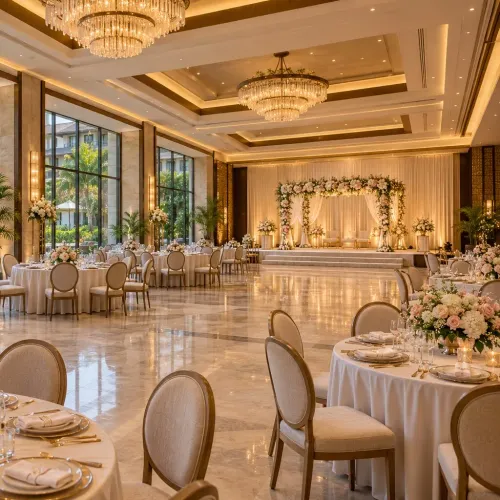
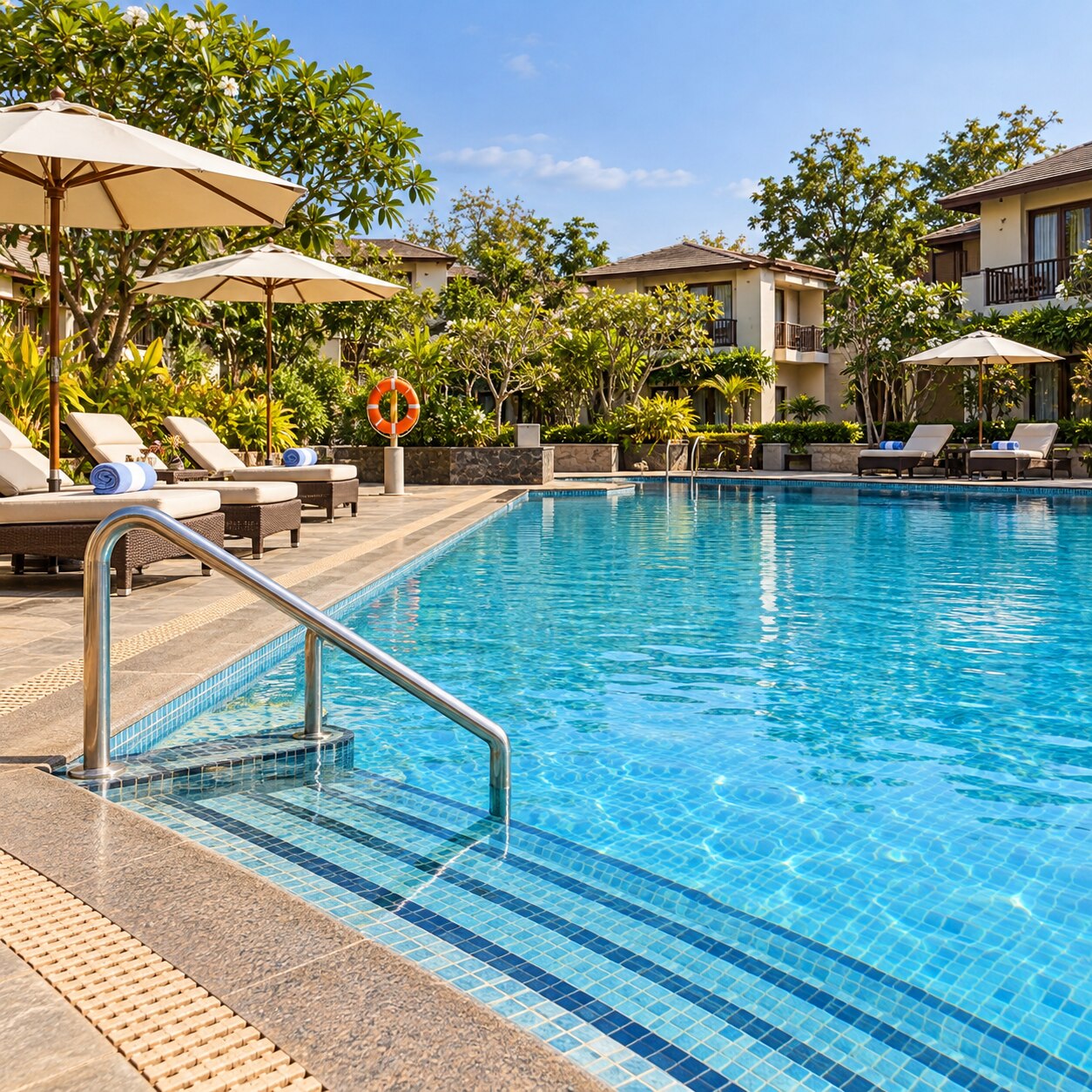
A pool reference in a booking may describe shared use, a fixed time slot, or access that disappears during maintenance and private events. Before paying, confirm the entitlement, safety conditions, extra costs, and fallback arrangements so you know whether the pool will actually work for your group.
Key takeaways
- Get pool access and operating hours confirmed for your exact dates.
- Check depth, lifeguard cover, child rules, and accessibility before booking.
- Ask about weather closures, cleaning schedules, and emergency equipment.
- Confirm extra fees, group limits, changing rooms, and arrival procedures.
Does the booking guarantee pool use on your dates?
A booking guarantees pool use only when the confirmation states that swimming pool access is included for your exact dates and package. “Pool access” might mean entry during a fixed time slot, not unlimited use, and it does not automatically mean private use.
Confirm whether your room, day outing, corporate event, or wedding package includes access at no extra charge.
Ask the resort to put these details in writing:
- The pool operating hours on each date of your stay, including whether access ends before checkout.
- All pool closure dates, maintenance periods, weather closures, and private-event buyouts.
- Whether access is unrestricted, time-limited, or subject to advance reservation.
- Whether you receive shared pool access with other guests or exclusive use for your group.
- Age, height, or child-access rules, plus whether a lifeguard is physically on duty during your planned swimming hours.
- Whether towels, changing rooms, showers, and toilets are included or charged separately.
Do not treat “pool available” as a guarantee that you can swim whenever you arrive. Ask what happens if a wedding or corporate event reserves the pool, and request an alternative or refund policy for an unexpected closure.
Keep the written confirmation, including the stated hours and exclusions, so you can challenge a mismatch at check-in.
Is the pool safe and suitable for every swimmer?
Book only when the pool’s design and supervision match every swimmer in your group. A shallow pool area does not make children safe: young children and weak swimmers need an attentive adult within arm’s reach, even when a lifeguard is on duty.
1. Ask for the exact pool depth at each section, including the transition from shallow to deep water. Check the children’s pool safety arrangements, age or height rules, and whether adults must supervise children continuously.
2. Inspect or request details of the barrier: a self-closing, self-latching gate, separation from guest walkways, and no ground-level room or event area opening directly onto the water. “Pool access” rooms improve convenience but reduce the time available to stop an unsupervised child.
3. Confirm non-slip surfaces around the pool, stable handrails, nearby toilets, showers, and changing rooms. Ask what happens during thunder, lightning, heavy rain, or a power failure, where guests wait, and when swimming resumes.
4. For an accessible stay, verify the complete route from the room or function room to the pool, an accessible changing area and shower, and the water-entry method: ramp, transfer system, or pool lift. An entrance ramp proves nothing about pool access.
A lifeguard cannot replace close adult supervision, and a depth sign cannot reveal a sudden drop or slippery surface. Request current photographs or a direct site inspection before paying, especially if children, older guests, or mobility-impaired swimmers will attend.
How are cleanliness, weather, and emergencies handled?
Ask to see dated pool water testing records, not just a claim that the water is “clean.” The log should show free chlorine, pool pH, test times, and corrective action when a result falls outside the operator’s target.
As a practical CDC benchmark, pH is 7.0–7.8 and free chlorine is at least 1 ppm; Nagpur’s legal requirements may differ.
Before paying, get clear answers about the written response plan:
- Where are the first-aid kit and automated external defibrillator, and which staff members are trained to use them?
- Can an emergency vehicle reach the pool, and which hospital handles serious incidents?
- When thunder is heard, do swimmers leave the water and wait inside a substantial enclosed building?
- Where do guests go during lightning, heavy rain, or a power failure, and what conditions allow reopening?
- Does staff record injuries, rescues, contamination events, and closures?
Ask whether the pool closes after faecal contamination and what disinfection procedure precedes reopening. Cryptosporidium tolerates chlorine unusually well, so CDC guidance advises staying out of the water for two weeks after diarrhoea. A written lightning safety procedure, visible test records, and a named emergency process provide stronger evidence than attractive photographs or verbal reassurance.
What rules, equipment, and group arrangements will affect your visit?
Ask for written rules before paying: confirm acceptable swimwear rules, pool towels, food and drink boundaries, and whether changing rooms, showers, toilets and lockers are beside the pool.
Confirm whether a trained lifeguard is physically on duty during your hours, where life jackets, rescue equipment and first-aid supplies are kept, and who supervises children; “resort” does not guarantee lifeguard cover.
- Ask whether outside food, alcohol and glass containers are prohibited, where drinks may be consumed, and who handles spills or broken glass. Alcohol reduces balance, judgement and swimming ability, so arrange supervision rather than relying on guests to self-manage.
- Check whether the route, changing area, shower and water-entry method work for every guest. A ramp at reception does not prove the pool has a lift, transfer system or accessible entry.
- For a corporate booking, confirm changing-room capacity, shower numbers, towel supply, deck power, Wi-Fi, sound limits and a non-pool programme if the pool closes.
For Two Brothers Resort Nagpur, request the pool plan and event rules rather than assuming the pool deck suits every booking.
| Group | Confirm before booking | What can go wrong |
|---|---|---|
| Families | Child age or height limits, shared-pool rules, supervision and life jackets | A child arrives without permitted flotation equipment |
| Couples | Privacy, swimwear rules, poolside food and alcohol limits | A quiet stay overlaps with a private function |
| Corporate groups | Exclusive-use hours, changing capacity, Wi-Fi and backup activity | Delegates share the deck or lose the programme |
| Wedding parties | Guest capacity, dance-floor and stage load limits, cables, lighting, glassware, wet-weather cover and pool boundary | Guests, wiring or equipment enter an unsafe wet zone |
Related product
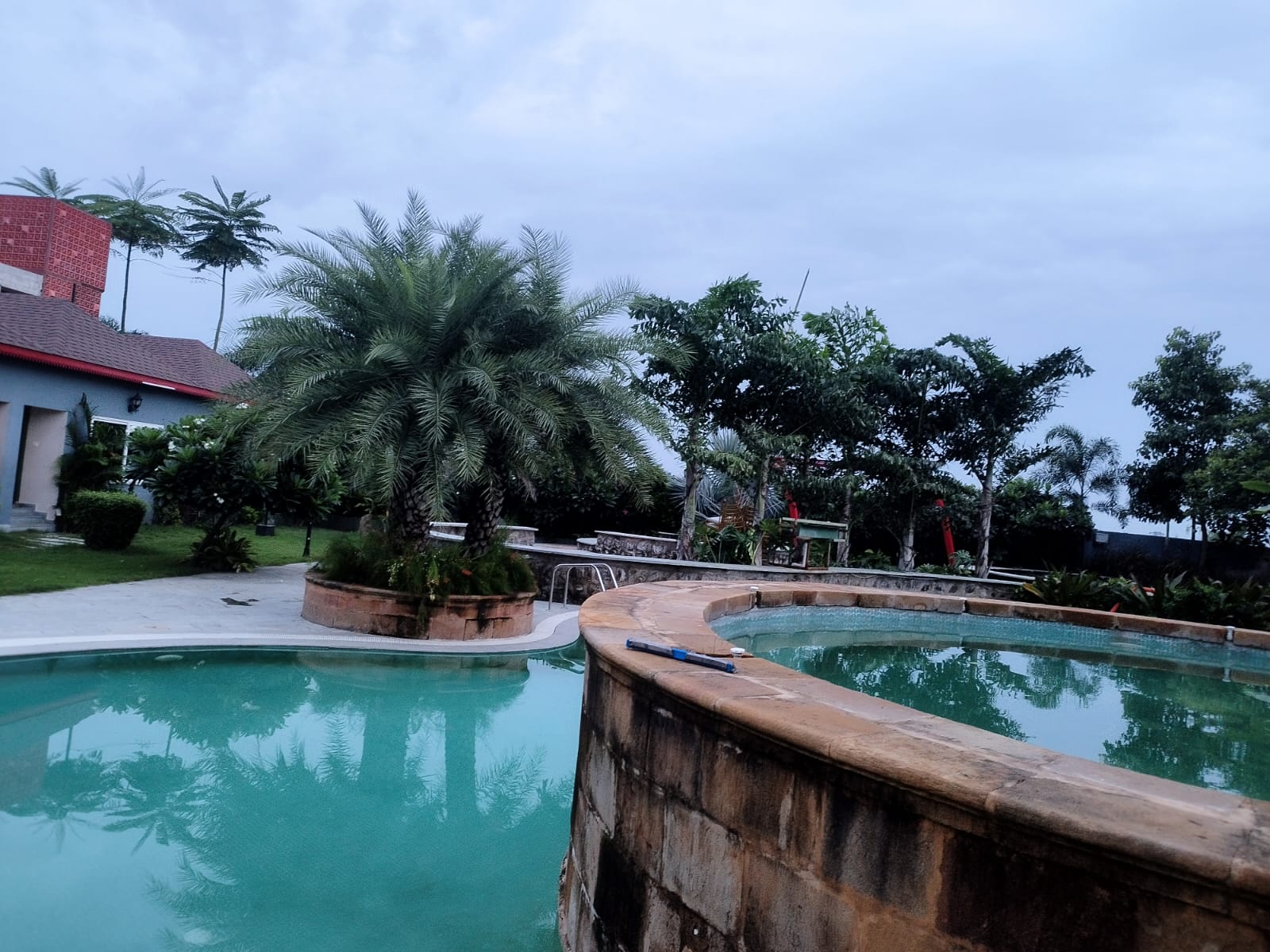 | Family Resort A blend of Natural scenic beauty & facilities like cozy cottages overlooking the lake, pure veg restaurant, fun activities makes our Resort a perfect... View product → |
What will the pool experience really cost—and what happens on arrival?
A room advertised with pool access is not the same price as a usable swim. Calculate the resort pool cost after taxes, booking fees, parking, meals, towel deposits, transport, and any charge for children or additional guests.
Ask for the promise in writing before paying. Confirm the pool opening hours, your allotted time, blackout dates, and whether a private event can displace your booking. Read the pool access cancellation policy: identify the deadline for a full refund and the remedy if the pool closes after payment.
- Save the booking confirmation, rate breakdown, pool hours, and staff messages.
- On arrival, make a quick pool inspection: check that the water is open, the stated equipment is present, and the changing route matches the description.
- If the pool is closed or unsuitable, do not accept a vague verbal promise. Photograph the condition, request an alternative facility or an appropriate refund, and ask the manager to record the complaint.
- Compare the effort as well as the price: include check-in time, walking distance from your room, changing time, fixed swim slots, and whether you must bring or hire towels.
| Option | What you pay for | Practical trade-off |
|---|---|---|
| Room package | Room rate plus included or add-on pool access | Best when you need overnight accommodation; access may be time-limited |
| Day pass | Entry fee, taxes, and possible food or towel charges | Lower commitment, but you may face capacity limits and no room for changing |
| Event or wedding package | Venue fee plus guest or activity charges | Convenient for groups; private use and pool availability need separate written confirmation |
Frequently asked questions
How do I confirm that a resort booking guarantees pool use?
Ask for written confirmation that swimming pool access is included in your exact dates and package. Check whether use is limited to fixed hours, time slots, or shared access.
What pool safety details should I check before booking?
Ask about pool depths, lifeguard cover, non-swimmer areas, child supervision rules, water access steps, and accessibility features.
How should a resort handle pool cleanliness, bad weather, and emergencies?
Ask about cleaning schedules, water-quality checks, closure procedures during lightning or heavy rain, first-aid supplies, rescue equipment, and emergency contacts.
Which pool rules and group arrangements can affect my visit?
Confirm swimming hours, swimwear requirements, food and drink restrictions, outside-equipment rules, guest limits, private-use options, and group booking procedures.
What pool-related costs and arrival details should I confirm?
Check for pool fees, deposits, towel charges, child or guest surcharges, activity costs, changing-room access, check-in timing, and what happens if the pool is closed on arrival.