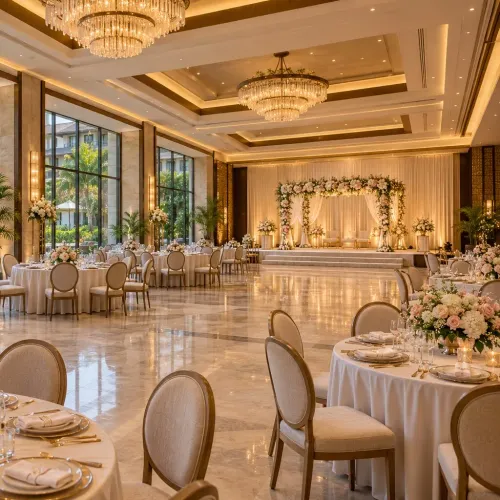
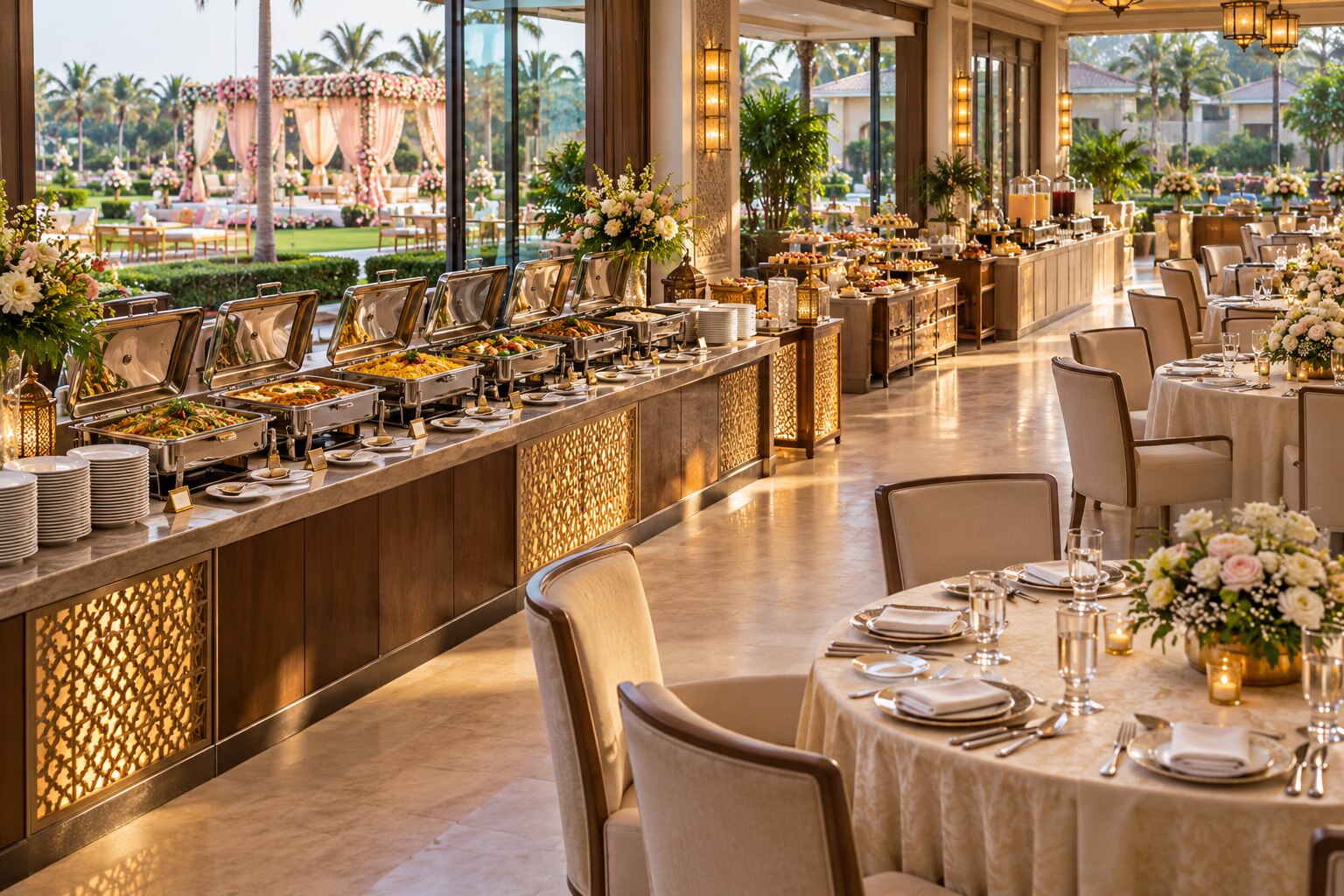
A wedding catering package can look generous while excluding service staff, dietary preparation, beverages, or the equipment needed to serve guests on time. By comparing the menu, service format, food-safety process, staffing plan, multi-day schedule, and written quotation, you can identify both the real cost and the operational risks before signing.
Key takeaways
- Ask for menus, service capacity, staffing, beverages, and late-night food in writing.
- Match buffet, plated, or live-counter service to guest numbers and function timing.
- Inspect kitchens, verify food licences, and document allergen controls before booking.
- Make every menu, quantity, service hour, tax, and cancellation term part of the contract.
What should a wedding catering package include beyond the menu?
A wedding catering package is incomplete if it lists dishes but not the controls behind them. Your wedding menu evaluation should cover course count, regional and international choices, children’s meals, beverages, late-night food, and a different menu for each function rather than repeated gravies and desserts.
1. Obtain confirmed guest counts for vegetarian, vegetarian-with-egg, vegan, Jain, halal, gluten-free, diabetic, alcohol-free, child, nut-allergic, and other allergy-sensitive meals. Ask whether “vegetarian” excludes eggs, and whether Jain meals exclude onion, garlic, potato, carrot, ginger, beetroot, and radish; record each exclusion in writing because family practices differ.
2. Ask how vegan meals for weddings, gluten-free meals, halal meals, diabetic meals, and allergy-sensitive meals will be prepared, labelled, transported, and served. Confirm dedicated utensils, preparation areas, storage, serving staff, and controls against shared stock, garnish, oil, tongs, and ladles.
A separate plate is not a separate dietary protocol if it was cooked beside the allergen.
3. Test variety by ingredient, cooking method, flavour, and texture, not by dish count. Ten similar gravies or six fried starters offer less choice than a shorter menu combining steamed, grilled, baked, braised, fresh, crisp, regional, and international dishes.
4. Confirm children’s portions, simple alternatives, and late-night food, including serving time and replenishment. Include breads, accompaniments, desserts, and beverages in the tasting; inspect labels, portions, crockery, and buffet controls.
For vegetarian, vegetarian-with-egg, Jain, vegan, and allergy-sensitive service, ask for separate preparation and serving procedures in the written package, not verbal assurances.
Which dining format and service capacity fit each wedding function?
Match the format to the programme, not its prestige. A buffet suits staggered arrivals and flexible timing; plated service suits a formal meal with fixed seating and synchronised courses.
| Format | Best fit | Main risk |
|---|---|---|
| Buffet | Reception dinner or delayed ceremony | Queues, uneven portions, exposed food |
| Plated service | Formal wedding meal with numbered tables | Cold food if kitchen and servers fall behind |
| Family-style dining | Smaller, social functions | Shared dishes complicate dietary control |
| Live food counters | Snacks, regional dishes, or late-night food | Cooking delays and concentrated queues |
| Packed meals | Departure, travel, or delayed guests | Poor presentation and missed dietary labelling |
Judge the buffet by peak throughput, not dish count. Request the station layout, buffet queue planning method, maximum simultaneous diners handled, and separate areas for breads, salads, mains, desserts, beverages, and live cooking. One queue for several hundred guests can overwhelm a well-stocked kitchen.
For a preliminary resource estimate, ask the wedding catering staff to show these numbers for each function:
- Buffet stations: start with one station per 75–100 guests, then adjust for menu complexity and guest mobility.
- Servers: assign staff for replenishment, live counters, and plated table delivery separately.
- Beverage staff, clearing staff, supervisors, and dishwashers: demand rises when rooms are far from dining areas.
- Plates, glasses, dining tables, and spare serviceware: include a reserve for breakage and delayed clearing.
Elderly guests need nearby seating and assisted plates; children benefit from shorter queues. Long room-to-dining travel favours buffet or packed meals, while a delayed ceremony favours flexible buffet service over a plated meal that may lose temperature.
How can you verify food quality, hygiene, and dietary safety before booking?
A wedding food tasting is useful only if it reproduces the event: serve the actual dishes, beverages, breads, accompaniments, children’s food, and desserts at the expected service time, using the intended buffet or plated format. Compare the written sample menu with the tasting, including serving size, garnish, crockery, labels, and ingredients.
- Request a 30–60 minute holding test. Check whether rice dries, fried foods soften, gravies form a skin, or dairy desserts lose safe refrigeration.
- Ask how food is reheated, not merely warmed. Repeated reheating damages texture and increases safety risk.
- During a catering hygiene inspection, see separate raw and cooked areas, vegetarian and non-vegetarian workspaces, clean utensils, covered preparation surfaces, pest protection, and refrigeration.
- Confirm hot food stays hot and cold food stays refrigerated or iced. Ask when serving utensils are changed after contamination.
- Ask staff to explain allergen cross-contact controls, including separate utensils and preparation surfaces for allergy-sensitive meals.
- Inspect potable water storage, ice machines or containers, covered ice scoops, and the route from water source to beverage station.
| Format | What to test | Failure sign |
|---|---|---|
| Buffet | Chafing-dish performance, labels, replenishment, queue stations | Food quality falls before guests are served |
| Plated | Portion consistency, table timing, hot holding, dietary identification | Plates arrive late, cold, or at the wrong table |
| Outdoor buffet | Shade, covers, insects, dust, refrigeration, generator backup | Sun, wind, or power loss affects safety |
Ask for the maximum holding time in writing, especially for hot-season events near Nagpur. Reject vague answers such as “the kitchen will manage it.”
How should catering be planned across a multi-day wedding schedule?
Build a multi-day wedding catering plan by service, not one menu repeated across every function. Assign a menu, serving time, production deadline, replenishment deadline, staffing level, and beverage quantity to each meal.
1. Schedule rehearsal meals, wedding breakfast and snacks, arrival snacks, lunch, ceremony refreshments, dinner, midnight snacks, and next-day departure meals. Add packed meals for guests leaving before service or travelling onward.
2. Match timing to the programme. Keep arrival snacks available for late arrivals, delay buffet replenishment during a postponed ceremony, and allow travel time from rooms to the dining area. Ask who supplies elderly-friendly portions, children’s portions, tea, coffee, water, and other beverages.
3. Confirm whether the same kitchen, chefs, servers, crockery, and dishwashers handle back-to-back functions. Require written handover times so an earlier lunch does not delay dinner preparation or force dishes to be cooked too far in advance.
4. Set the final guest count guarantee and the date for increasing or reducing it. Record the planned buffer, shortage protection for late arrivals, treatment of unserved food, and charges for meals beyond the guarantee.
5. Inspect an outdoor buffet contingency before booking: shade or enclosed backup space, fans or cooling, insect control, covered food transport, potable water, and generator-backed refrigeration and cooking. Ask how hot food, cold dishes, and beverages remain protected during delays.
A written timeline exposes gaps that a package price hides. It also shows whether the venue can serve each group properly instead of merely promising every meal.
What must the catering quotation and resort contract state?
A wedding catering quotation becomes comparable only when the charging unit is explicit: per person, per meal, per event, or a guaranteed minimum. A low per-plate catering cost can conceal large add-ons, so the resort wedding catering contract must show quantities, guest-count cut-off, payment dates, and cancellation terms.
Check these items line by line:
- Children’s rates, vendor and staff meals, tasting charges, service staff, cooks, buffet attendants, beverage servers, clearing staff, dishwashers, supervisors, and managers
- Crockery, linen, drinking water, tea and coffee, live counters, cake cutting, taxes, service charges, corkage, and outside-cake fees
- Transport, generator costs, overtime, wastage, cancellation penalties, and rental equipment
- Bottled-water brands, refill arrangements, potable-water and ice handling, and whether ice is made from protected potable water
- The actual station layout, queue plan, weather backup, shade or enclosed space, fans or cooling, covered food transport, insect protection, and generator-backed refrigeration and cooking
- Kitchen responsibility, service roster for each event, meal timeline, replenishment deadlines, and the person authorised to replace a failed dish or equipment item
The FSSAI licence or registration number must match the responsible business name and premises on the FSSAI system. If an outsourced caterer prepares or serves the food, name that legal entity in the contract; a resort’s promise is not enough.
At Two Brothers Resort Nagpur, request these documents and layouts before comparing packages, not as verbal assurances on the wedding day. Include beverages, breads, children’s food, accompaniments, dessert, portions, labels, and crockery in the tasting specification.
Related product
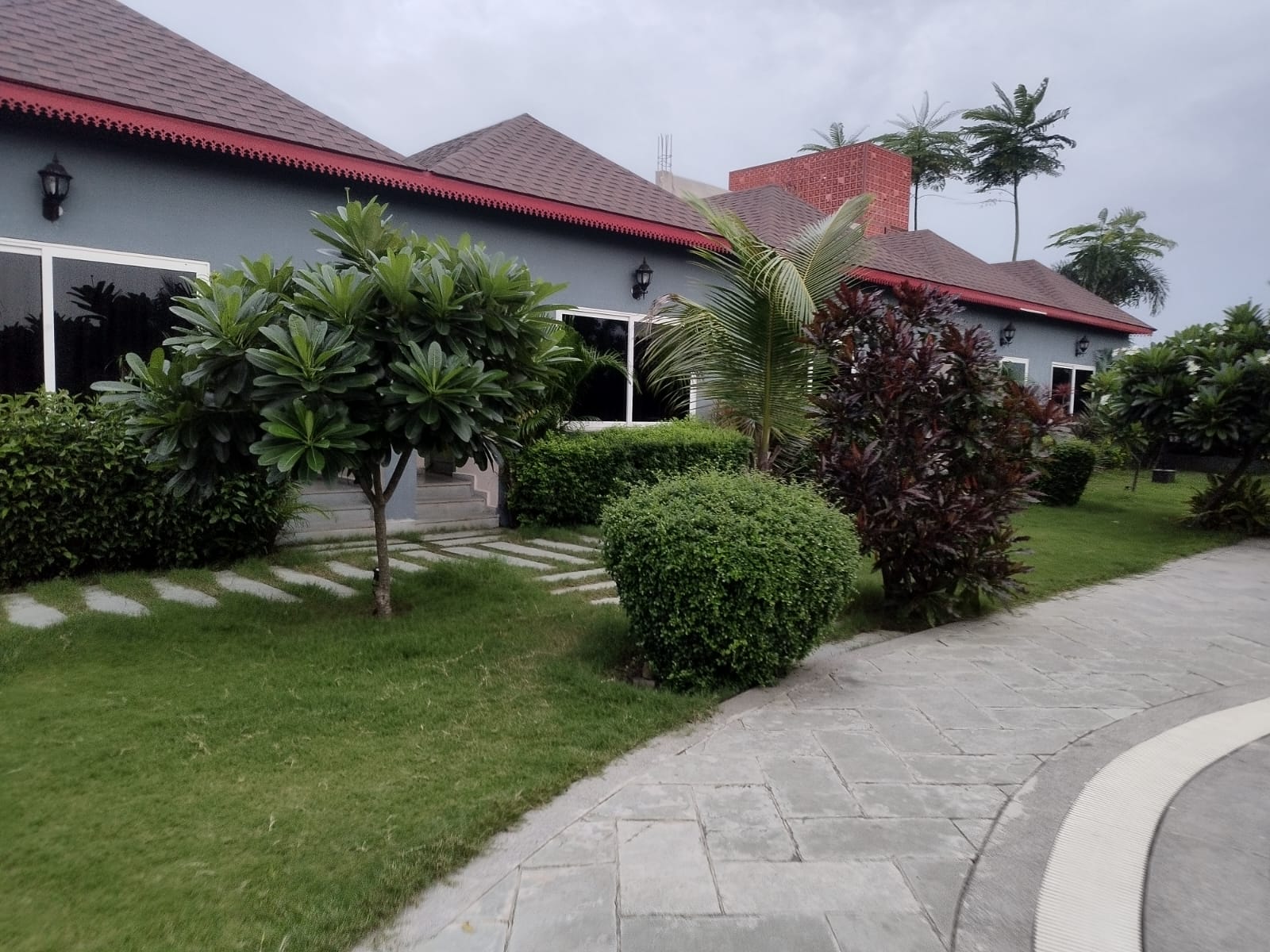 | Destination Wedding Looking for the perfect destination wedding place in Nagpur? Two Brothers Resort is where fairytales come true! Celebrate Love Amidst Nature & Luxury... View product → |
Frequently asked questions
What should a wedding catering package include beyond the menu?
It should state course counts, regional and international dishes, children’s meals, beverages, late-night food, staffing, service equipment, taxes, and separate menus for each function.
Which dining format and service capacity fit each wedding function?
Use plated service for formal, timed meals; buffets for varied choices and faster guest flow; and live counters for interactive stations. Confirm serving capacity, queue management, seating, and replenishment plans for your guest count.
How can you verify food quality, hygiene, and dietary safety before booking?
Taste representative dishes, inspect the kitchen and storage areas, ask for the resort’s FSSAI licence details, and require written allergen controls, vegetarian separation, temperature checks, and procedures for special diets.
How should catering be planned across a multi-day wedding schedule?
Create a function-by-function schedule covering arrival snacks, welcome meals, ceremonies, receptions, children’s food, vendor meals, beverages, and late-night service. Vary cuisines and portion sizes while allowing time for setup, replenishment, and cleanup.
What must the catering quotation and resort contract state?
Record the guaranteed guest count, per-person or package price, menu and substitutions, service format, staffing, equipment, taxes, corkage, dietary provisions, timing, overtime, minimum spend, cancellation terms, and payment schedule.