An indoor marriage hall protects your celebration from Nagpur’s heat, monsoon rain, dust and traffic, but the room alone does not determine whether the day runs smoothly. By comparing guest movement, room inventory, technical facilities, operating rules and total costs, you can decide whether an attached resort solves enough practical problems to justify its trade-offs.
Key takeaways
- Choose one property to reduce guest transfers between rooms, parking and functions.
- Test air-conditioning, backup power, acoustics, washrooms and dining flow before booking.
- Match each function to its guest count, noise level and scheduled hall access.
- Compare room blocks, meal timings, parking, cancellation terms and extra-hour charges.
How does a resort hall change the guest experience compared with a conventional marriage hall?
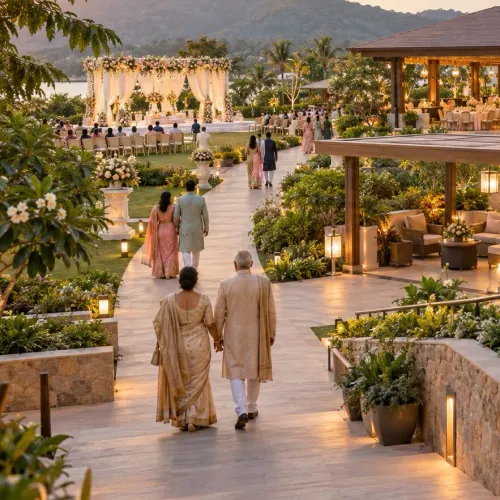
A resort hall can make the celebration feel like one continuous stay rather than a series of transfers. Keeping on-site accommodation, dining and the function room on one property reduces journeys between hotels, parking areas and the celebration, which matters during Nagpur heat, monsoon rain and peak traffic.
| Option | Guest experience | Operational effect |
|---|---|---|
| Conventional marriage hall | Guests arrange separate hotels and travel to the function space | Arrival delays, parking pressure and weather exposure increase |
| Resort wedding venue | Guests can stay, eat and attend the event within one property | Guest movement becomes shorter and easier to coordinate |
| Conventional hall | Décor, catering and event access are controlled in one time-limited venue | Early arrivals and outfit changes require extra planning |
| Resort wedding venue | Rooms support outfit changes, rest breaks and late-night departures | The schedule gains flexibility, but room access must match the programme |
The marriage hall comparison changes when the resort lacks enough rooms. A block that covers only part of the guest list leaves families split across properties, bringing back transfers and coordination problems. Ask for the peak-night room inventory, room-release date, check-in time, late-checkout terms and extra-bed policy in writing.
Plan the route before booking. Confirm how guests move from drop-off to reception, rooms, dining and the hall, and separate wedding traffic from kitchen or service corridors. A clear movement plan protects privacy, prevents bottlenecks and keeps elderly guests from taking unnecessary walks. One event-day coordinator should control rooms, catering and hall access.
Which indoor facilities determine whether the hall will feel comfortable?
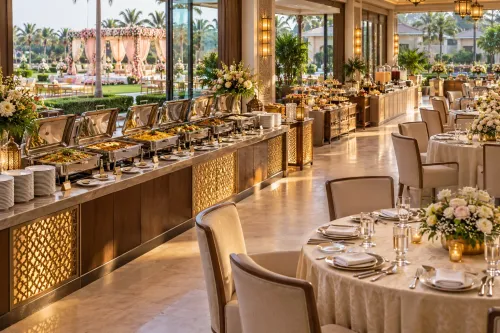
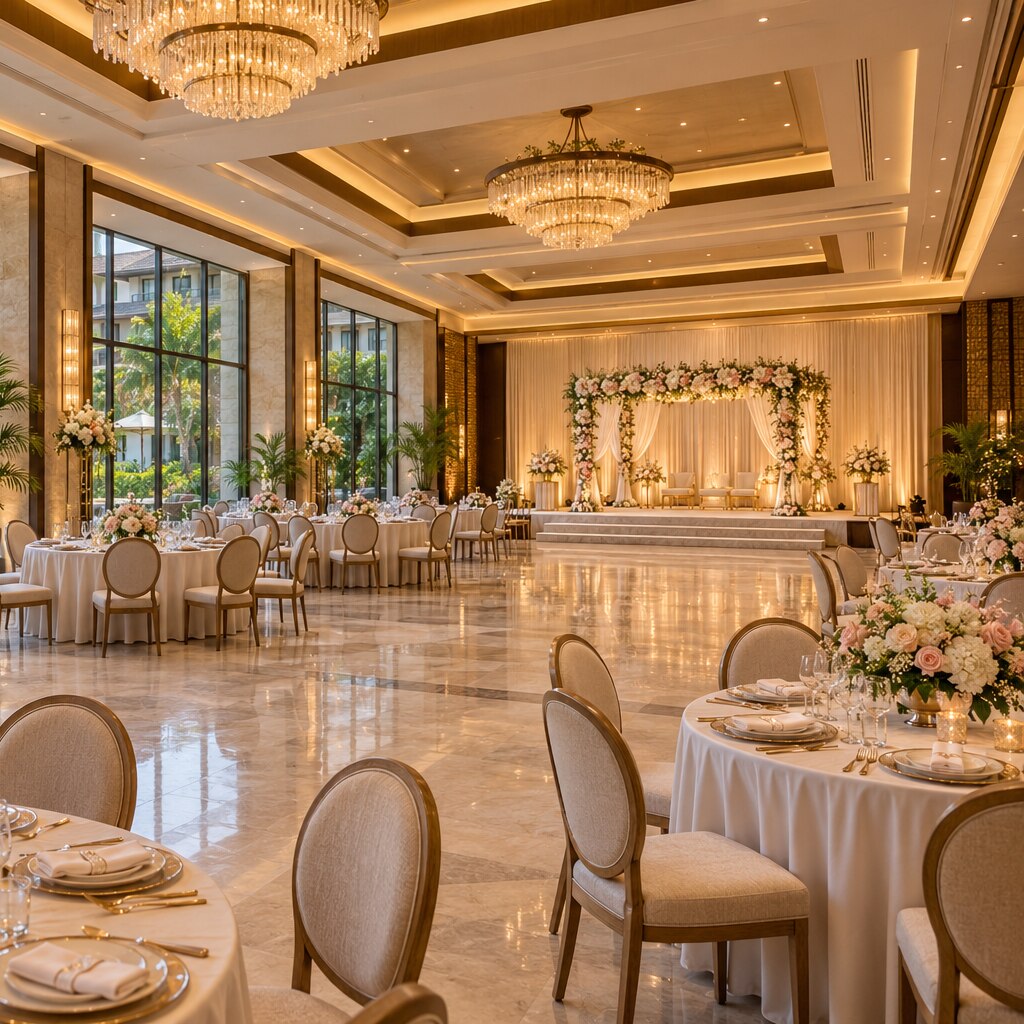
The usable hall is the capacity left after tables, buffet lines, dance floors, stages, DJ consoles, photography areas and service aisles are installed—not the empty-room maximum. Treat indoor marriage hall facilities as a working system, and request a scaled floor plan for your exact seating and dining layout.
| Check | Verify | Why it matters |
|---|---|---|
| Exact hall capacity | Seated and dining numbers on the proposed floor plan | A legally permitted crowd can still face blocked aisles and congested service areas. |
| Ceiling height | Clear height below beams, décor and lighting rigs | A low or obstructed ceiling makes the room feel crowded and worsens heat and sound. |
| Air-conditioning and ventilation | Cooling coverage, fresh-air supply and temperature control with a full guest load | Poor circulation leaves guests uncomfortable even when the room is cooled. |
| Stage dimensions | Width, depth, height, backstage access and space for the couple’s seating | A small stage pushes décor, photographers or performers into guest aisles. |
| Exits and alarms | Approved exits, emergency lighting, travel routes and current fire-safety documentation | Décor or buffet placement must not reduce escape routes. |
| Washrooms and changing rooms | Distance, number, cleanliness, ventilation and private changing space | Long walks create queues and disrupt the ceremony. |
| Accessibility | Step-free route from drop-off through the hall, dining area, toilets and guest rooms | A lift to the lobby is useless if the function room still requires stairs. |
Test the microphone in the actual room. Hard walls, glass, marble and high ceilings can make speeches echo.
Ask whether backup power covers air-conditioning, refrigeration, elevators, lighting, sound, fire systems and guest-room essentials, then test changeover time and generator noise.
How should you match each wedding function to the hall and its operating schedule?
Match each function to the hall’s usable layout and operating window, because each part of the wedding consumes space, sound capacity and turnaround time differently.
| Function | Best operational fit | Main requirement |
|---|---|---|
| Engagement | Engagement venue with compact seating | Seating, stage access and a short décor setup |
| Haldi | Haldi venue near washrooms and changing rooms | Washable surfaces, open floor area and quick cleanup |
| Mehendi | Mehendi venue with relaxed lounge seating | Artist tables, guest circulation and extended daytime access |
| Sangeet | Sangeet hall with strong sound control | Dance floor, sound check, rehearsal time and a noise curfew |
| Pheras | Quiet hall zone with ceremonial focus | Mandap space, aisle clearance and minimal dining traffic |
| Reception | Largest layout with controlled dining flow | Stage, buffet lines, photography area and service aisles |
Do not schedule a morning ceremony immediately after a late reception unless the hall confirms overnight cleanup and early access. A resort serving staying guests, a restaurant or another event needs a written handover plan.
- Confirm room check-in time for guests arriving before the first function.
- Request late checkout terms for relatives changing outfits or leaving after the reception.
- Put décor setup access, kitchen loading time and sound-check access in the contract.
- Record the noise curfew and the exact dismantling deadline.
- Ask for overtime and early-access charges, including whether they apply to vendors.
- Match the room block to peak-night inventory, then obtain room-release, cancellation and extra-bed terms in writing.
This schedule prevents a beautiful hall from becoming a bottleneck between ceremonies, meals and guest departures.
What should you test and compare before signing a resort-hall package?
Before signing, test the venue in operation and compare an itemized quote based on your guest count, menu, event hours and room block. A venue site visit checklist should cover these points:
- Walk from the hall to restrooms, changing rooms, dining space and accessible entrances; note distance, lighting and queue space.
- Stand at the stage, rear seats and dining area while playing music. Check sound clarity, mobile signal, kitchen-to-dining flow and whether generator noise reaches the hall.
- Identify every emergency exit, alarm, emergency light and rain route. Ask which exits remain open after the stage, buffet and décor are installed.
- Test parking capacity during a likely arrival surge, including taxis, coaches, vendor vehicles, accessible drop-off and vehicles shared with hotel or restaurant guests.
- Ask for the generator’s load and changeover test. Confirm that power backup covers air-conditioning, refrigeration, elevators, lighting, sound, fire systems and guest-room essentials.
Compare the written wedding venue inclusions against the actual setup:
| Item | Confirm in writing | Cost or failure to check |
|---|---|---|
| Furniture and equipment | Tables, chairs, stage, sound, lighting and power backup | Rentals or weak production |
| Operations | Housekeeping, security, cleanup and waste removal | Service gaps after the event |
| Commercial terms | Taxes, service charges, corkage, deposits and generator fuel | A higher final bill |
| Control and timing | Outside-vendor rules, setup access, noise curfew, dismantling deadline and overtime charges | Restricted suppliers or expensive delays |
Ask who manages the event day and obtain the current fire-safety approval, cancellation terms and refund terms before paying.
When is a resort marriage hall the practical choice for an indoor celebration?
Choose a resort marriage hall when your guests benefit from sleeping, eating and celebrating on one property. This is especially practical for a Nagpur indoor wedding venue during extreme heat or monsoon rain, when transfers create delays, parking problems and weather exposure.
| Option | Practical advantage | Risk to check |
|---|---|---|
| Conventional marriage hall | More freedom to use outside hotels and vendors | Guests travel between rooms, parking and functions |
| Resort hall | Accommodation, catering and event management share one site | Limited room inventory or one supplier’s failure affects the whole event |
Confirm that the peak-night room inventory covers your actual guest list. Put the room block, room-release date, check-in, late checkout, extra-bed charges, cancellation terms and guest-room placement in writing.
Protect the decision in the wedding venue contract by checking:
- Vendor permissions for décor, sound, catering, alcohol and photography
- Setup hours, noise curfew, dismantling deadline and overtime charges
- Food-safety arrangements, kitchen hygiene responsibility and meal service controls
- Backup plans for air-conditioning, refrigeration, electricity, elevators, lighting, sound and guest-room essentials
- Accessibility for wheelchair users and older guests, including step-free routes, lifts and accessible washrooms
- Public-liability and food-safety coverage, with the responsible party named
Ask for one event-day coordinator with authority over rooms, kitchen, vendors, power and guest movement. Two Brothers Resort Nagpur is worth assessing against this checklist, not simply its package description, because concentrated resort facilities for weddings help only when the operating terms are equally clear.
Related product
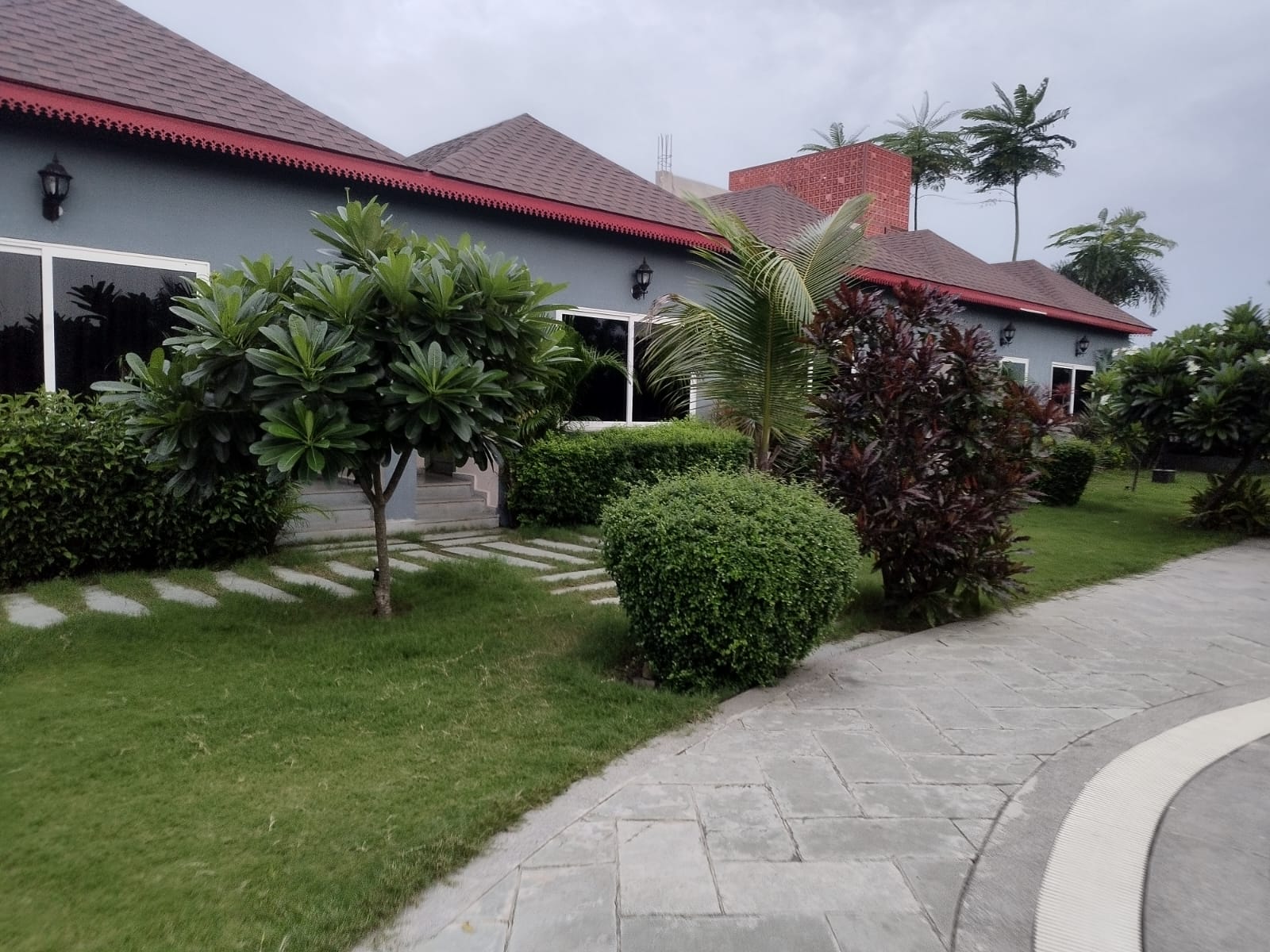 | Destination Wedding Looking for the perfect destination wedding place in Nagpur? Two Brothers Resort is where fairytales come true! Celebrate Love Amidst Nature & Luxury... View product → |
Frequently asked questions
How does a resort hall change the guest experience compared with a conventional marriage hall?
A resort hall keeps accommodation, dining and the function room on one property, reducing transfers between hotels, parking areas and wedding events. That helps during Nagpur heat, monsoon rain and peak traffic.
Which indoor facilities determine whether a wedding hall feels comfortable?
Check air-conditioning performance, ventilation, generator backup, acoustics, washroom access, seating space, dining flow, lifts or ramps and parking arrangements. Test the hall during a busy setup if possible.
How should you match each wedding function to the hall and its operating schedule?
Assign functions according to guest count, noise level, seating layout and setup time. Confirm access hours for decoration, sound checks, meals, ceremonies, teardown and any extra-hour charges.
What should you test and compare before signing a resort-hall package?
Inspect the hall, power backup, cooling, acoustics, washrooms, kitchen or dining area and parking. Compare room availability, meal timings, included equipment, vendor rules, cancellation terms and additional charges in writing.