A luxury resort earns its price through details that affect sleep, bathing, meals, safety, connectivity and event reliability—not through impressive photographs alone. By checking each amenity in use, you can compare resorts fairly and spot gaps before you book a room, family stay or large gathering.
Key takeaways
- Test mattresses, blackout curtains, bathroom fixtures and noise before booking.
- Check Wi-Fi, power, access routes, emergency exits and on-site security.
- Compare dining, recreation and wellness by schedules, capacity and actual use.
- For events, confirm capacity, weather backup, power supply and guest movement.
Start with the Room and Bathroom: What Should You Inspect?
Inspect the actual room, not the model shown online: a luxury hotel room checklist begins with whether its mattress, pillows, blackout curtains and sound insulation can deliver sleep. “Soundproof rooms” is a claim to test by listening for corridors, plant equipment and nearby events.
1. Check the climate control, usable desk, bedside charging points, wardrobe capacity, minibar, in-room safe, housekeeping supplies and balcony furniture. Ask whether this exact room matches the photographs, and where to report a fault and how quickly maintenance responds.
2. Run the bathroom before unpacking. Confirm hot water stays hot, pressure remains usable when another tap runs, toiletries are replenished, towels are clean and absorbent, the hairdryer works, ventilation removes steam, and the drain clears without pooling.
3. Inspect access as a route, not a label: step-free arrival, accessible parking, a suitable lift, clear paths to the room and event spaces, usable toilets, and bathroom clear floor space with grab rails. Ask to see the actual accessible room; a label is worthless if the door, shower or turning area cannot accommodate you.
Luxury resort room amenities earn their name through reliable use, not decoration. Record missing items and promises in writing before paying, especially for an accessible room, adjoining rooms or a balcony advertised as private.
Check Connectivity, Accessibility and Safety Beyond the Room
A resort is not functional luxury if the internet fails in the meeting room, a wheelchair route ends at a staircase, or a power cut stops the lifts and air-conditioning. Test the infrastructure beyond your bedroom before you book.
1. Test resort Wi-Fi in your room, meeting space and outdoor areas. Ask for wired internet, mobile-network coverage and resort backup power. Confirm the generator supports air-conditioning, kitchen refrigeration, lifts, internet, lighting and audiovisual equipment, then ask for its changeover procedure and full-load test record.
2. Trace the complete route for accessible resort amenities: step-free arrival, accessible parking, suitable lifts, clear paths to bedrooms and event rooms, usable toilets, and rooms with bathroom clearances and grab rails. Ask to see the actual room and route; an “accessible” label proves nothing.
3. Check safety infrastructure: illuminated paths, emergency contacts, first-aid arrangements, rescue equipment and an ambulance route. Inspect parking for coach turning, drop-off space, lighting, rain and heat protection, accessible bays, taxi arrangements and separation from service vehicles.
4. Treat pool safety as a staffed service, not a water feature. Confirm water-cleaning routines, opening hours, depth markings, shallow areas, slip-resistant surfaces, controlled access, changing rooms, shaded seating and towels. Ask whether a trained lifeguard is present; a towel attendant is not one.
5. For Nagpur’s heat and monsoon, inspect the indoor or covered alternative. It must fit your guest count, provide full air-conditioning and offer dry, weatherproof routes between rooms, parking, dining and the event area. A decorative canopy is not a backup venue.
Compare Dining, Recreation and Wellness by How They Work
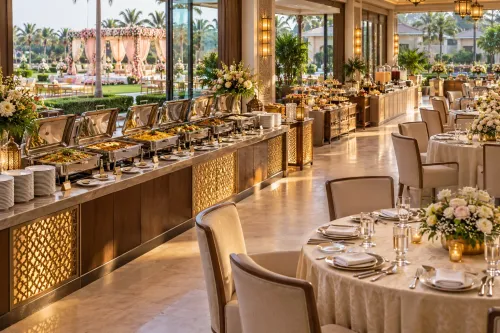
Luxury amenities earn their label by working at the point you need them, not by appearing in photographs. Compare resort dining amenities, family resort amenities and wellness facilities by their operating details.
| Area | Ask for | Warning sign |
|---|---|---|
| Dining | Breakfast hours, room service, kitchen closing time, meal prices, reservations, child portions, allergen handling, vegetarian and religious options | No current FSSAI licence, vague chilled-food controls, slow buffet replenishment or unclear drinking-water source |
| Family recreation | Age-appropriate play areas, controlled sign-in and sign-out, supervision, emergency contacts, toilets, stroller routes, baby cots, high chairs, childproofing and indoor space for rain or extreme heat | Toys without safeguarding procedures are presented as childcare |
| Wellness | Spa and treatment rooms, sauna, steam room, gym equipment, opening hours and advance booking rules | A “wellness” label with no usable schedule or equipment list |
Ask whether the pool has marked depths, a shallow section, slip-resistant surfaces, controlled access, rescue equipment, first-aid procedures and a trained lifeguard. A towel or admissions attendant is not a lifeguard.
- Request a menu tasting and amenity tour before booking.
- Ask who handles allergen orders and how buffet food stays chilled and replenished.
- Confirm whether play-area staff record incidents and contact parents.
A tasting proves flavour, not food-safety capacity or high-volume service. Likewise, a room full of toys does not prove supervised childcare. Verify every promise against the hours, staff, controls and booking rules you will actually use.
For Events, Test Capacity, Backup Plans and Guest Flow
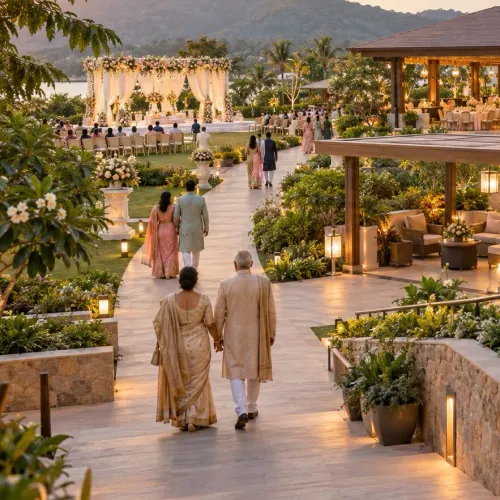
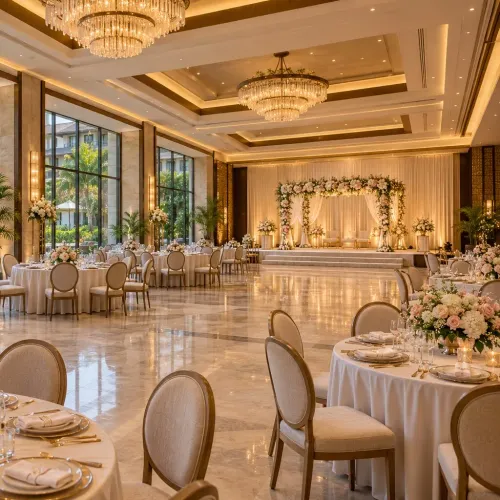
A luxury resort event facility earns its place by moving people safely, quietly and on schedule—not by displaying a large lawn.
Confirm an indoor or covered alternative with full air-conditioning, capacity for your guest count, weatherproof routes between parking, rooms, dining and the event area, plus a written plan for simultaneous weddings, conferences and leisure use.
Ask these questions before booking:
- Are event spaces acoustically separated from bedrooms and recreation areas?
- What noise permissions and amplified-sound time limits apply, and where do loading and late departures occur?
- Has the generator been tested under full event load for air-conditioning, lighting, internet and audiovisual equipment? This is the real test of event backup power.
- Does parking provide coach turning, lit drop-off, rain and heat protection, accessible bays, taxi arrangements, separate service-vehicle access and an ambulance route?
| Event type | Facilities to verify | Failure prevented |
|---|---|---|
| Corporate | Registration, breakout and dining zones; quiet work areas; secure storage; wired internet; HDMI and USB-C inputs; displays or projection; microphones, monitors, blackout capability and an on-site technician | Delayed sessions, exposed materials and unusable presentations |
| Wedding | Private getting-ready room with power and mirrors; vendor entrance; décor storage; protected ceremony route; nearby toilets and a baraat route | Setup traffic, weather delays and procession confusion |
| Mixed use | Written guest-flow plan separating meetings, weddings, leisure and bedrooms | Noise complaints and guests crossing active event routes |
Use this corporate retreat amenities test and destination wedding venue checklist when comparing Two Brothers Resort Nagpur with another site; ask for measurements and operating plans, not assurances.
Use a Booking Checklist to Test Value Before You Pay
A written resort amenity checklist turns attractive claims into booking decisions. Ask for the room inventory held for your group, the release date, connecting or family rooms, accessible rooms, early check-in, late checkout and the remedy if reserved rooms are sold elsewhere.
A venue that scatters guests across unrelated properties can create transport, supervision and cost problems.
Before paying, request written answers about:
- Parking capacity versus guest count, coach turning, drop-off, lighting, accessible bays, rain and heat protection, taxis and ambulance access.
- A dry, weatherproof route between rooms, parking, dining and the event area, plus an air-conditioned backup room for the full guest count.
- Simultaneous weddings, conferences and leisure use, including the location of amplified music, loading traffic, late departures and applicable noise limits.
Test resort sustainability practices with evidence: labelled waste-segregation bins, food-waste collection or composting, refillable water stations, wastewater-treatment records, energy monitoring and a procurement policy. ISO 20121 events guidance is a useful reference for an event-management system; solar panels and sustainability slogans do not prove certification.
To compare luxury resorts, score each category from 1 to 5, then ask which missing feature would cause the greatest disruption:
| Category | Score what you verify |
|---|---|
| Sleep | Noise control and room placement |
| Bathing | Water, drainage and accessibility |
| Food | Dietary handling and meal reliability |
| Connectivity | Wi-Fi, mobile signal and backup power |
| Safety | Paths, first aid and emergency access |
| Accessibility | Complete step-free guest journey |
| Family needs | Rooms, routes and child provisions |
| Event resilience | Backup space and crowd flow |
Frequently asked questions
What should you inspect in a luxury resort room and bathroom?
Check the mattress, pillows, blackout curtains, sound insulation, bathroom fixtures, water pressure, hot-water supply and visible cleanliness.
How can you check a resort’s connectivity, accessibility and safety?
Test Wi-Fi in the room and public areas, check mobile signal and power outlets, inspect access routes, locate emergency exits and ask about security procedures.
How should you compare a resort’s dining, recreation and wellness amenities?
Compare operating hours, reservation rules, capacity, equipment, inclusions and backup options instead of counting amenities from a brochure.
What should you confirm before booking a resort for an event?
Confirm room and venue capacity, guest flow, parking, power backup, rain plans, sound limits, catering logistics and emergency access.