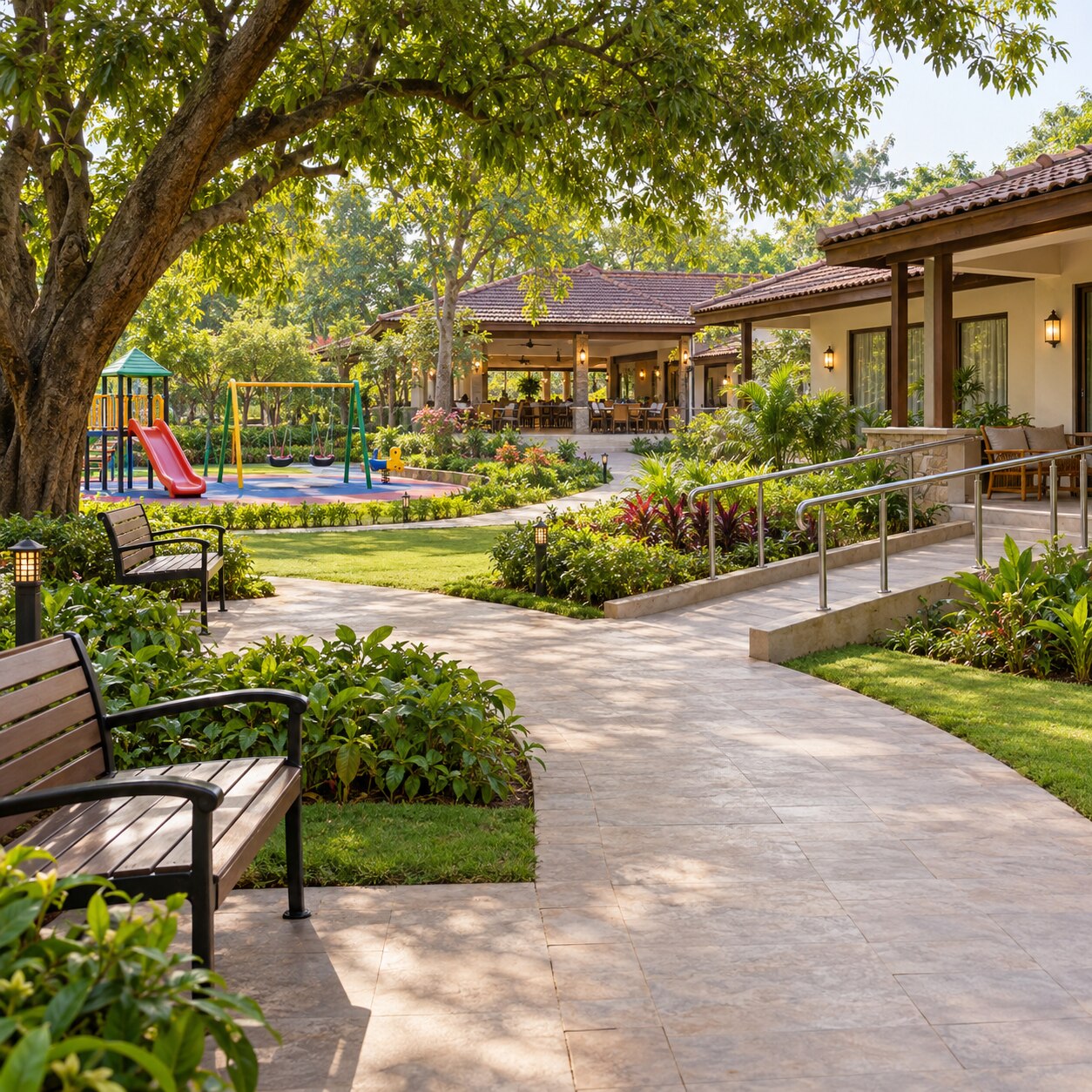
A family-friendly label does not tell you whether a toddler can move safely around the pool, an older guest can reach the dining area without stairs, or an infant can be changed and fed comfortably. By checking routes, bathrooms, supervision, medical arrangements and event conditions, you can judge whether a resort fits your family’s actual ages and abilities before booking.
Key takeaways
- Inspect the complete route between rooms, pools, play areas and dining spaces.
- Choose level paths, seating, handrails and toilets close to main facilities.
- Ask about lifeguards, child supervision, meal options and the nearest medical help.
- Request a video walkthrough before booking a family stay or event.
Can children move and play safely across the resort?
Children can move and play safely only when the resort controls both hazards and access: child safety at resorts depends on more than a family-friendly label. Check the entire route from the room to the pool and play area, not just the facilities themselves.
Toddlers need barriers against water, stairs, balconies and roads, plus shaded places for breaks. Preschoolers need shallow water and play equipment that matches their height and ability. School-age children need clearly marked pool depth changes, safe walking routes and equipment without broken parts or exposed fixings.
Teenagers still need supervision rules, safe sports areas and protection from deep water, traffic and poorly lit paths.
Use this physical-safety checklist during a visit or ask for current photographs:
- Pool depth: Are shallow and deep sections clearly marked, with no sudden drop-offs?
- Lifeguard presence: Is a trained lifeguard actively watching the pool, rather than working reception or another duty?
- Pool fencing and controlled access: Can young children reach the water without passing a self-closing gate or staff-controlled entry?
- Pool surrounds: Are walking surfaces non-slip, with rescue equipment visible and no loose tiles?
- Play areas: Are swings, slides and climbing frames stable, intact and separated from vehicles and water?
- Routes: Do paths have lighting, shade, handrails where needed and no open drains, sharp edges or uneven paving?
- Supervision: Does the resort state that adults remain responsible, including around inflatable toys and shallow sections?
Is the resort a continuous, manageable route for older adults?
Walk the entire route before booking; a ground-floor room proves little if the dining area or toilets require stairs. Good older-adult accessibility means step-free access from the vehicle drop-off through every essential destination, without a long detour or surface that becomes unsafe when wet.
- At arrival, check that the vehicle can stop close to reception and that ramps and handrails cover every change in level.
- From reception to the room, look for firm, non-slip surfaces and uneven terrain that could catch a walking stick or mobility aid.
- From the room to dining and toilets, measure the walking distance and identify seats with back support where guests can rest.
- From accommodation to activity or event areas, confirm a lift or level route instead of relying on staff to carry mobility equipment.
Repeat the walk after dark. Poor lighting hides edges and changes in level, while missing handrails increase fall risk; ask staff to show the route as it looks at night, not only in a daytime tour.
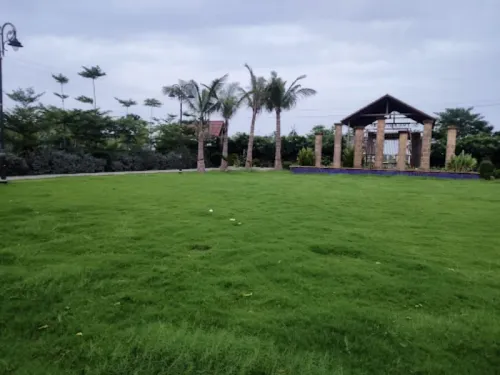
Heat adds another test near Nagpur. Check for shade and a cooled indoor alternative, drinking water, and seating along outdoor paths. For wedding stays, confirm the event location, finish time and late-night vehicle plan so older guests do not face a dark, crowded walk back to their rooms.
If the route fails at any point, the resort is not manageable for that guest.
Do the rooms, toilets and bathing areas work for every age?
A family-room label proves little: confirm the cot, bathroom, windows, balcony and route to shared facilities before paying. Ask for photographs or a room inspection rather than relying on a booking description.
| Age group | Confirm before arrival | Failure to accept |
|---|---|---|
| Infant or toddler | Stable cot with a firm mattress, secure balcony, restricted windows, protected stair access, safe hot-water controls and covered or inaccessible sockets | A loose cot, climbable balcony rail, reachable hot tap or decorative objects within a child’s reach |
| Older adult | Step-free access, western-style toilets, grab bars fixed to structural supports, a level-entry shower, shower seat, anti-skid flooring, night lighting and an emergency call system | A slippery wet floor, low toilet, loose grab bar or portable plastic chair offered as a shower seat |
| Everyone | Changing facilities near activity areas, reliable hot water, clear floor space and a bathroom door that opens without blocking assistance | A distant toilet, cramped washroom or changing table placed beside an unprotected pool route |
Ask whether accessible toilets are available along the route from the room to dining and activity areas, not only in reception. Confirm that air-conditioning, hot water and emergency systems remain available during power changes.
For infants, check that staff will provide the cot and mattress in the assigned room, not on request after arrival. For older guests, request a room close to dining areas and test the walk at night; a daytime route can hide poor lighting, uneven paving or missing handrails.
What supervision, food and medical support should a family expect?
Do not assume resort staff supervise children because a play area or pool is on site. Ask for the adult supervision rules: whether children must remain with a parent, whether a lifeguard is present, and whether any childcare service has named staff, age limits, sign-in and sign-out controls, and stated hours.
Before paying, get these answers in writing:
- Who watches children during meals, activities and events, and what happens if that staff member leaves?
- Can the kitchen prepare allergy-safe meals, prevent cross-contact, identify ingredients and provide separate utensils?
- How does the resort respond to vomiting, diarrhoea, fever or suspected food poisoning, and where can an unwell guest rest away from others?
- Are infant feeding, bottle refrigeration, diaper disposal and medication storage available, or must parents handle them?
- Can the resort provide an infant crib and high chair, and are both confirmed for your room and dining area?
Request the names and phone numbers included in the resort’s first aid and emergency contacts, the location of the first-aid kit and trained responder, and the nearest hospital or clinic. Confirm how an ambulance reaches the property, who calls it, and how staff communicate if mobile service or the main power fails.
“Doctor on call” does not prove that a clinician is on site or that emergency treatment has a guaranteed arrival time. For older adults, carry a medication list and confirm who handles refrigeration, dosing reminders and urgent transport.
How should you test the resort before booking a family stay or event?
Before paying a deposit, ask the resort to answer your family resort checklist in writing and mark the route on a map. A phone or video walkthrough is better than relying on photographs, especially for older guests who cannot manage long distances.
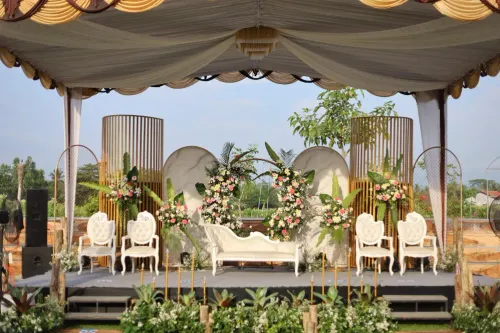
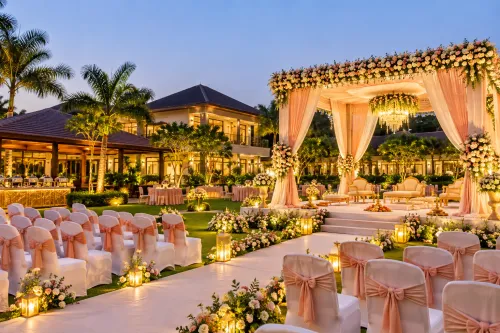
- Can you place young children and older adults away from the function lawn, DJ, generator, loading route and kitchen exhaust?
- What is the wedding or corporate event schedule, including music cut-off, guest departure and overnight service activity?
- What are the permitted occupancies, exit widths, emergency lighting and fire-safety approval for the actual hall or marquee?
- During peak heat near Nagpur, where are the shaded paths, drinking-water points, indoor rest areas and air-conditioned alternatives? Does cooling continue during power changes?
- At the expected arrival and return times, how long is the road transfer? Can vehicles reach reception, and are accessible evacuation and transport arrangements available?
- Can you inspect the step-free route from drop-off to rooms, dining, toilets and the event space after dark?
Two Brothers Resort Nagpur should be assessed with these questions rather than its advertised guest count or event photographs.
| Test | Suitable answer | Warning sign |
|---|---|---|
| Quiet rooms during weddings | A room block away from noise, with a written schedule | Rooms beside the DJ, lawn or loading route |
| Event capacity | Hall or marquee occupancy tied to exits and approval | Capacity quoted only for the lawn |
| Heat management near Nagpur | Shade, water, cooling and rest stops | Outdoor movement with no indoor fallback |
| Travel and access | Close drop-off, seating stops and late-night return plan | Long walk or no transport after the event |
Related product
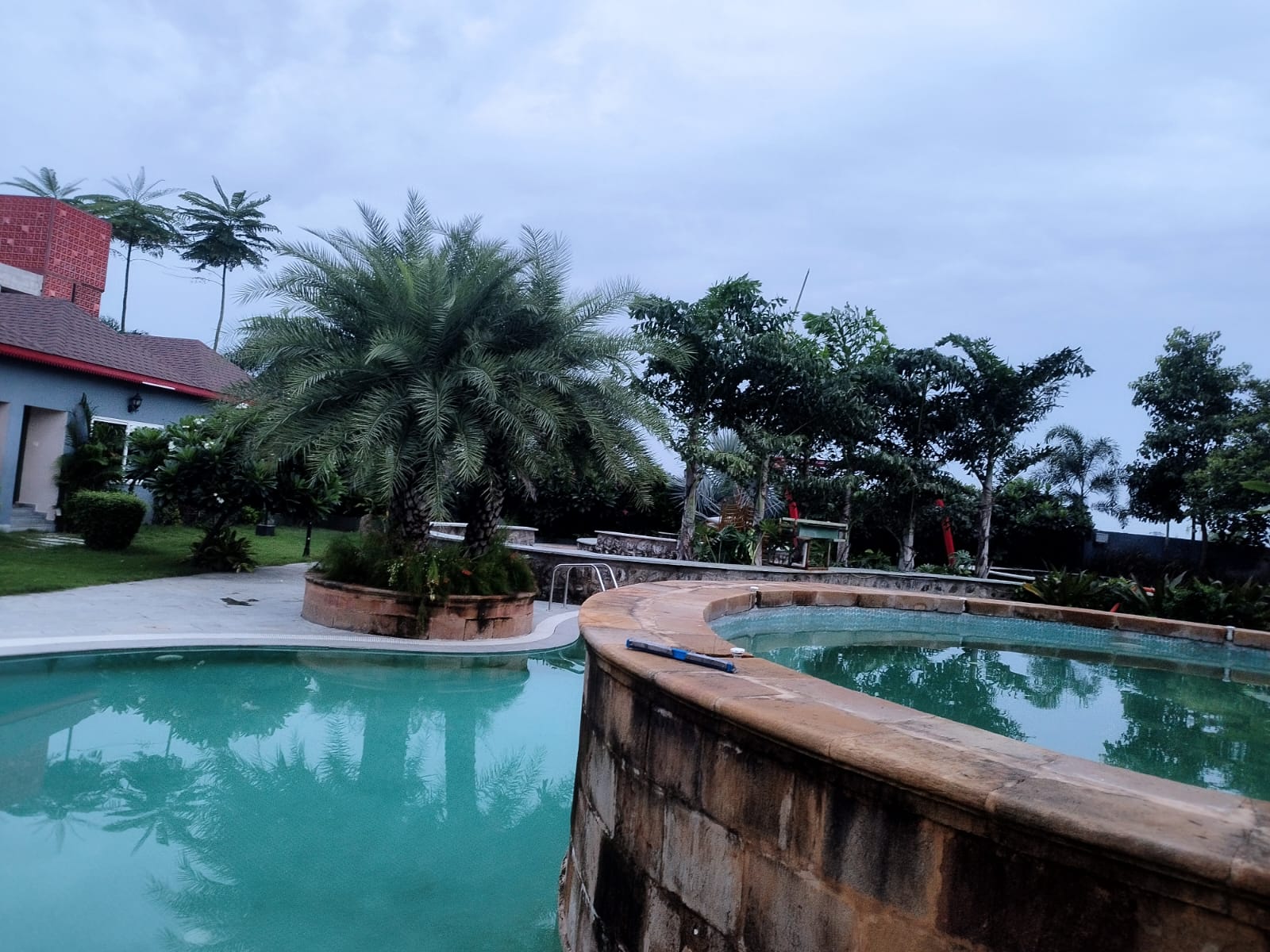 | Family Resort A blend of Natural scenic beauty & facilities like cozy cottages overlooking the lake, pure veg restaurant, fun activities makes our Resort a perfect... View product → |
Frequently asked questions
How can you check whether children can move and play safely at a resort?
Walk the full route from the room to the pool and play area. Check for locked pool access, non-slip surfaces, visible staff, shaded areas, safe play equipment and hazards such as open drains, sharp edges or vehicle crossings.
What makes a resort manageable for older adults?
Look for level, continuous paths with firm surfaces, frequent seating, handrails on ramps and stairs, good lighting, nearby toilets and short distances between rooms, dining areas and activities. Ask whether mobility aids can enter rooms and facilities.
Which room and bathing features should families inspect?
Check doorway width, bed height, floor space, toilet grab rails, non-slip bathroom flooring, a handheld shower, hot-water controls and whether the bathroom has a step. Confirm that children can use the room without access to unsafe balconies or pools.
What supervision, food and medical support should a family resort provide?
Ask who supervises children, whether pool lifeguards are present, how allergies are handled, which child-friendly and low-salt meals are available, and the distance to the nearest clinic or hospital. Keep emergency contacts and medication instructions with your group.
How should you test a resort before booking a family stay or event?
Request a current video or make an inspection visit at the same time your group will arrive. Test the room-to-facility route, bathroom access, seating, food service, mobile signal, emergency exits and transport arrangements before paying a deposit.